|
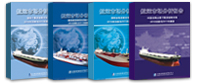
On April 12, 2011, Shanghai International Shipping Institute (SISI) successfully held a press briefing on “2010 Global Port Development Report”. Following the launch of “Shipping Market Analysis Report”, SISI released the first issue of “Global Port Development Report” for the sake of better serving the construction of Shanghai International Shipping Center and providing decision-making consulting for governments and enterprises. SISI Secretary-General Zhen Hong and other staff attended the press briefing.
Based on the ports worldwide, the “Global Port Development Report” reviews the development and changes of ports in 2011, shares advanced management and technology of global leading ports, analyzes the major trends of future ports, and aims to provide port and shipping practitioners with real-time information on the development of the port industry.
As analyzed in the “2010 Global Port Development Report”, with the overall rebound of global economy, the port industry achieved a steady recovery in 2010. The global port throughput experienced a strong recovery in the first quarter, a slowdown in the second and third quarters, and a slight recovery in the fourth quarter. The recovery of containers was still stronger than other cargoes, and that of ports in Asian emerging economies stronger than other economies. Affected by the economic recovery and the weather in 2010, major global dry bulk ports saw a rise in the number of stranded ships as compared with 2009, and the global leading liquid bulk ports showed a relatively weaker recovery as compared with other cargoes. The port throughput is expected to maintain a relatively stable growth, and the cargo throughput is anticipated to stand at about 9% in 2011.
As for port management, the global port industry adopted different business strategies and management approaches to improve port competitiveness. Canada continued to vigorously develop sea-rail transport, and gradually added high-end service functions into dry ports. The shipping service industry had become an emerging field for major ports to fight for. The measure of “developing supply chain finance and building up a financial port” brought new profit potentials for more ports. Inter-port cooperation had shaken off geographical restrictions, extending its business into trade and logistics, etc., and shifting from capital cooperation to information and technology cooperation. There was also a continued trend of port privatization and building terminals with shippers.
As for port charges, with the strong economic recovery in some regions in 2010, some ports had adjusted port rates at their own discretions. In 2011, Chinese coastal ports will increase port charges to a substantial extent. European ports will remain frozen in port rates or decisively launch a variety of preferential policies to compete for limited cargo supplies.
As for terminal construction, the building of container terminals was more active in Eastern areas than in Western countries. The construction of bulk terminals tended to become more professional and pursue large-scale. Asia accelerated its building of cruise terminals. The world’s five largest terminal operators achieved good performance, turning their investment focus to Southeast Asia, Brazil and other emerging economies.
As for port technology, “low-carbon port” became the mainstream, with port machinery focusing more on large-scale and security. Meanwhile, countries strived to establish international logistics information platforms, boosting the development of port informatization by a variety of scientific and technological means. Singapore had designed, developed and constantly upgraded the integrated port operation system CITOS and port management and e-commerce platform PORTNET. At the Port of Rotterdam, port logistics information was shared by governments and enterprises. Japanese ports planed to manage the system by identification cards.
Moreover, the “2010 Global Port Development Report” also ranked the world’s leading 50 ports based on their comprehensive development. In 2010, the Port of Singapore still achieved a better comprehensive development than other ports, ranking first with a score of 90.1. With outstanding performance in port production and operation, the Port of Shanghai scored 90.78 in a single indicator on port transport production and development, and ranked first in both container throughput and cargo throughput among global ports. Port of Ho Chi Minh saw a remarkable growth and achieved huge development in both shipping & production and infrastructure, scoring 65.55 and 77.56 respectively.
|















 Back:
Back:
 Next:
Next: