|
Hong Kong and Singapore together with Malaysia, Vietnam and Cambodia scored high in this year's Global Connectedness Index (GCI) in relation to their size and development.
Although Europe is still tops, the GCI data in the Deutsche Post DHL survey showed that the world's economic "centre of gravity" was shifting eastward as China continues exerting its influence over world trade.
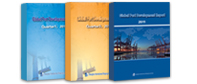
The DHL report covers the proportion of interactions that cross national borders as well as outward and inward trade flows and the breadth of geographic distribution.
While the economic stalling of 2012 seems to have been left behind, the third annual survey indicated that recovery remains "sluggish" and capital flows have yet to recover to pre-crisis 2007 levels.
This year's study found trade routes and lengthened and trends toward regionalisation of earlier years appear to be fading.
Nine out of the top 10 of the most connected countries were European, led by the Dutch. North America ranked as the second most connected region.
The 10 countries where global connectedness increased the most between 2011 and 2013 are all emerging economies in places such as Burundi, Mozambique and Jamaica.
Because overall global connectedness is still "lower than many think", the DHL report said that "trillions of US dollars" in potential gains can be made by increasing its depth.
"Even after the IMF's latest downward revision, the world economy is still projected to grow faster from 2014 to 2019 than over any of the past three decades," said the study.
"Looking ahead, the biggest threats to globalisation may come from policy fumbles or protectionist interventions rather than macroeconomic fundamentals," it said.
|














 Back:
Back:
 Next:
Next: