|
The Southeast Asian bloc ASEAN on Tuesday announced an ambitious strategic plan that includes harmonising trade standards and greater financial integration in an effort to collectively become the world's fourth-largest economy.
The five-year, 41-page plan for the 10-member Association of Southeast Asian Nations, released during a leaders' summit in Malaysia, calls for increased regional trade, freer movement of businesses and people, enhanced transparency and regulatory practices and sustainable mining, industry and farming policies to attract foreign investment.
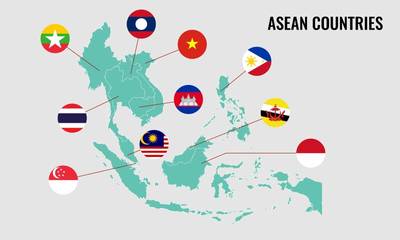
The plan said ASEAN countries - Indonesia, Thailand, Malaysia, Vietnam, the Philippines, Singapore, Cambodia, Laos, Myanmar and Brunei - must deepen their economic integration, pursue energy security, boost transport connectivity and strengthen supply chains.
"Carrying on with business as usual will not suffice for this highly dynamic economic region," the plan said.
"For ASEAN to become the fourth-largest global economy by 2045, countries in the region will need to deepen their economic integration and enhance their agility to address multifaceted challenges."
The document identified several challenges for ASEAN’s economic integration ranging from geopolitical tensions, shifting trade flows and technological transformation to climate change impacts and demographic shifts.
Formed in 1967 initially as five members, ASEAN established an economic community in 2015 with the aim of integrating its economies and boosting the region's global standing.
But despite rapid growth of its members economies in recent years and a collective GDP of $3.8 trillion, integration has been slow, with huge differences in its members' economies, political systems, population sizes and development levels, and no central authority to ensure compliance with ASEAN agreements and initiatives.
The strategic plan said ASEAN's Economic Community Council would be be responsible for implementing the strategies while the ASEAN secretariat would monitor implementation.
The ongoing tariff war between the United States and China and steep U.S. tariffs on Southeast Asian countries has created urgency for ASEAN to move towards regional integration faster, said Tricia Yeoh, Associate Professor of Practice at the University of Nottingham Malaysia.
Yeoh said ASEAN countries must recognise the greater collective value of unified negotiations rather than pursuing bilateral agreements on their own.
“ASEAN needs to demonstrate efficacy in order for it to remain relevant. If they can't even achieve negotiating over Myanmar or the code of conduct with China on the maritime issue, people will question ASEAN’s purpose,” she said, referring to two thorny political issues within the bloc.
https://www.marinelink.com/news/asean-unveils-plan-integrate-economies-526176
|











 Back:
Back:
 Next:
Next: