|
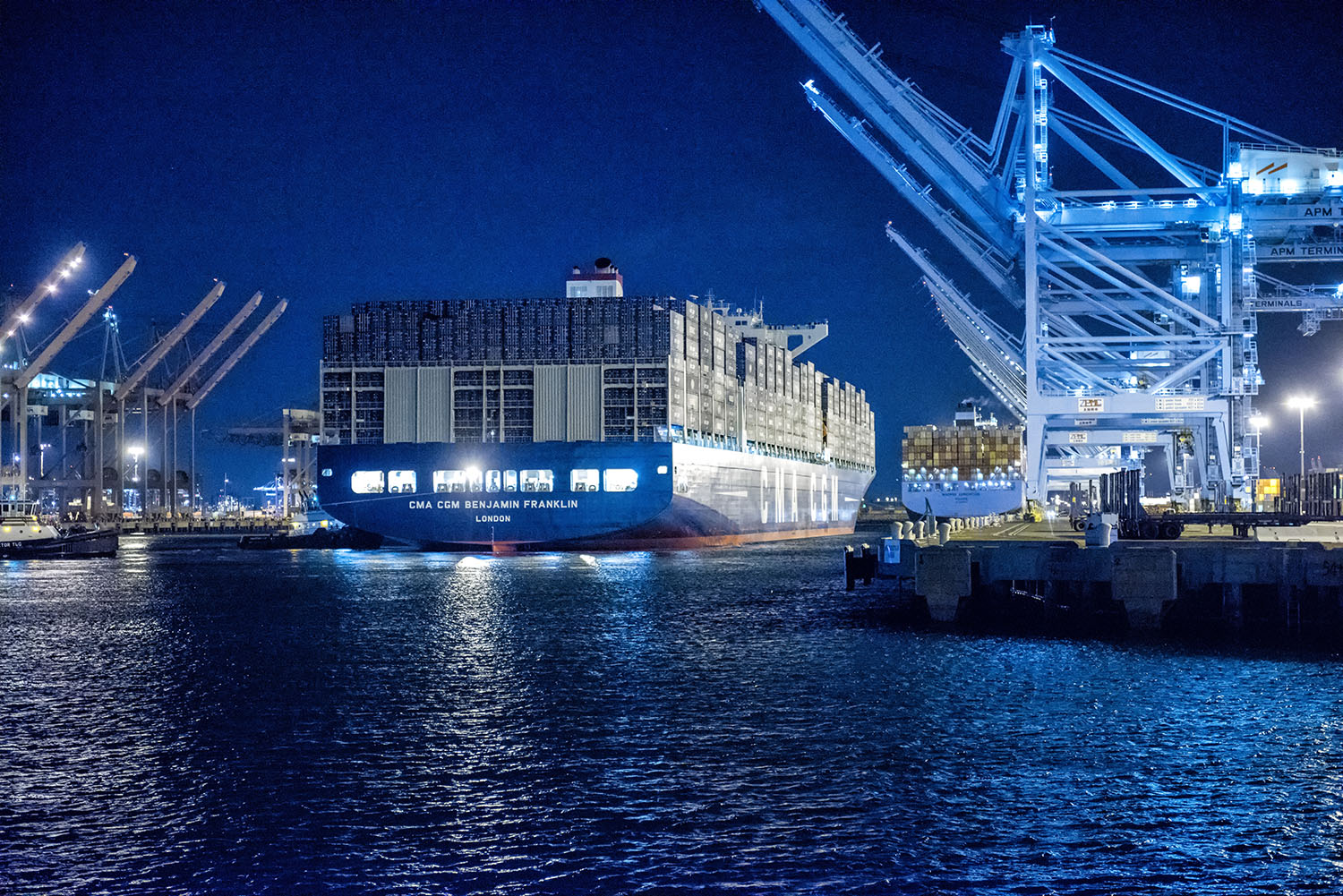
Carriers are deploying larger ships to maintain service reliability as rerouting around Africa and other disruptions reshape global trade lanes, reports New York's Journal of Commerce.
The shift is not limited to the Red Sea crisis. Drought restrictions at the Panama Canal and alliance restructuring earlier in 2025 have also driven carriers to add capacity on Asia-Europe and Asia-Mediterranean routes.
Sea-Intelligence noted that carriers injected significant tonnage into Asia-North Europe to preserve weekly schedules. Chief executive Alan Murphy said 24,000 TEU ships were deployed to North Europe, forcing 14,000 to 20,000 TEU vessels onto the Asia-Mediterranean trade.
Smaller ships were cascaded further to Transatlantic and Latin American corridors, spreading overcapacity across secondary lanes. Despite these moves, mismatches in vessel sizes remain.
About 1.7 million TEU of new capacity, mainly ships between 15,000 and 24,000 TEU, is due in 2026. Yet vessels of 5,000 TEU capacity are still vital for smaller networks.
Europe continues to face congestion at major hubs. Limited buffer capacity at terminals and inland links has forced reliance on smaller ports. Antwerp and Rotterdam remain under strain clearing backlogs after demand surges.
Shippers have responded by extending lead times and diversifying port choices. These measures underline the operational pressure from cascading tonnage and persistent congestion across interconnected trade lanes.
https://www.shippingazette.com/news?news_id=9260100000030
|
















 Back:
Back:
 Next:
Next: