|
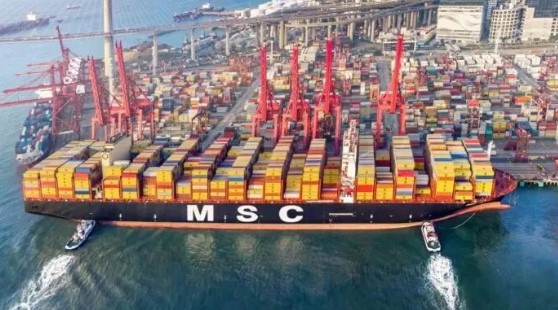
The Mediterranean Shipping Company (MSC) has achieved an unprecedented milestone in container shipping, acquiring 500 second-hand vessels since August 2020. This feat places MSC in a league of its own, revolutionizing fleet expansion within the industry. Recent acquisitions include the 2,796 TEU Calandra for USD 27 million and the 1,732 TEU Fitz Roy for over USD 26 million.
According to Alphaliner, MSC's sustained campaign is unmatched in shipping history.
In August 2020, MSC's fleet capacity stood at 3.8 million TEU. Today, it has nearly doubled to 7.4 million TEU, cementing MSC's position as the world's largest container shipping company with over 21% of global capacity. By focusing on second-hand vessels instead of newbuilds, MSC rapidly scaled its fleet while maintaining flexibility to adapt to changing market demands. This strategy propelled MSC past Maersk in early 2022, when both carriers had fleets of around 4.2 million TEU. MSC has since widened this gap with consistent growth, strengthening its market dominance.
MSC's fleet scale has allowed it to navigate global trade lanes independently, moving away from reliance on vessel-sharing alliances. Following the conclusion of the 2M Alliance with Maersk in February 2025, MSC launched its independent global network while maintaining selective slot-exchange arrangements. This independence aligns with its strategy of building a self-reliant, agile shipping operation.
MSC's growth strategy has not relied solely on second-hand acquisitions. The company has balanced newbuild deliveries, charters, and direct orders to expand capacity. This approach proved critical during the global container market disruptions of the pandemic, supply-chain congestion, and the Red Sea crisis. Despite rising ship values and charter rates, MSC maintained its acquisition pace, achieving remarkable growth even in turbulent times.
According to Alphaliner, MSC's sustained campaign is unmatched in shipping history.
In August 2020, MSC's fleet capacity stood at 3.8 million TEU. Today, it has nearly doubled to 7.4 million TEU, cementing MSC's position as the world's largest container shipping company with over 21% of global capacity. By focusing on second-hand vessels instead of newbuilds, MSC rapidly scaled its fleet while maintaining flexibility to adapt to changing market demands. This strategy propelled MSC past Maersk in early 2022, when both carriers had fleets of around 4.2 million TEU. MSC has since widened this gap with consistent growth, strengthening its market dominance.
MSC's fleet scale has allowed it to navigate global trade lanes independently, moving away from reliance on vessel-sharing alliances. Following the conclusion of the 2M Alliance with Maersk in February 2025, MSC launched its independent global network while maintaining selective slot-exchange arrangements. This independence aligns with its strategy of building a self-reliant, agile shipping operation.
MSC's growth strategy has not relied solely on second-hand acquisitions. The company has balanced newbuild deliveries, charters, and direct orders to expand capacity. This approach proved critical during the global container market disruptions of the pandemic, supply-chain congestion, and the Red Sea crisis. Despite rising ship values and charter rates, MSC maintained its acquisition pace, achieving remarkable growth even in turbulent times.
The acquisition of 500 second-hand vessels is a remarkable milestone, but MSC shows no signs of slowing down. With a strong orderbook of newbuilds and continued second-hand acquisitions, further fleet expansion is likely. However, as global trade growth slows and the container orderbook grows, concerns over capacity surplus and freight-rate competition loom. For now, MSC's extraordinary growth from 3.8 million TEU in 2020 to 7.4 million TEU in 2023 underscores its dominance as the global leader in container shipping.
https://www.shippingazette.com/news/9260800000392
|















 Back:
Back:
 Next:
Next: